

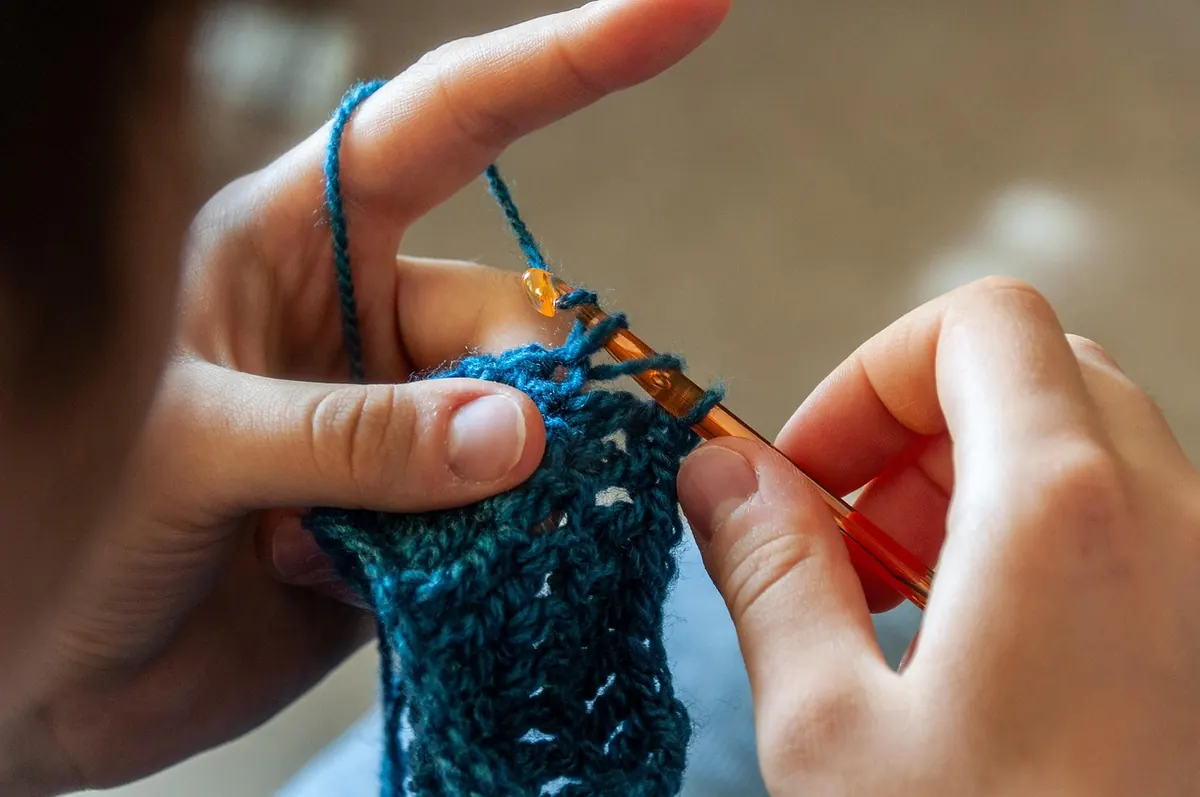

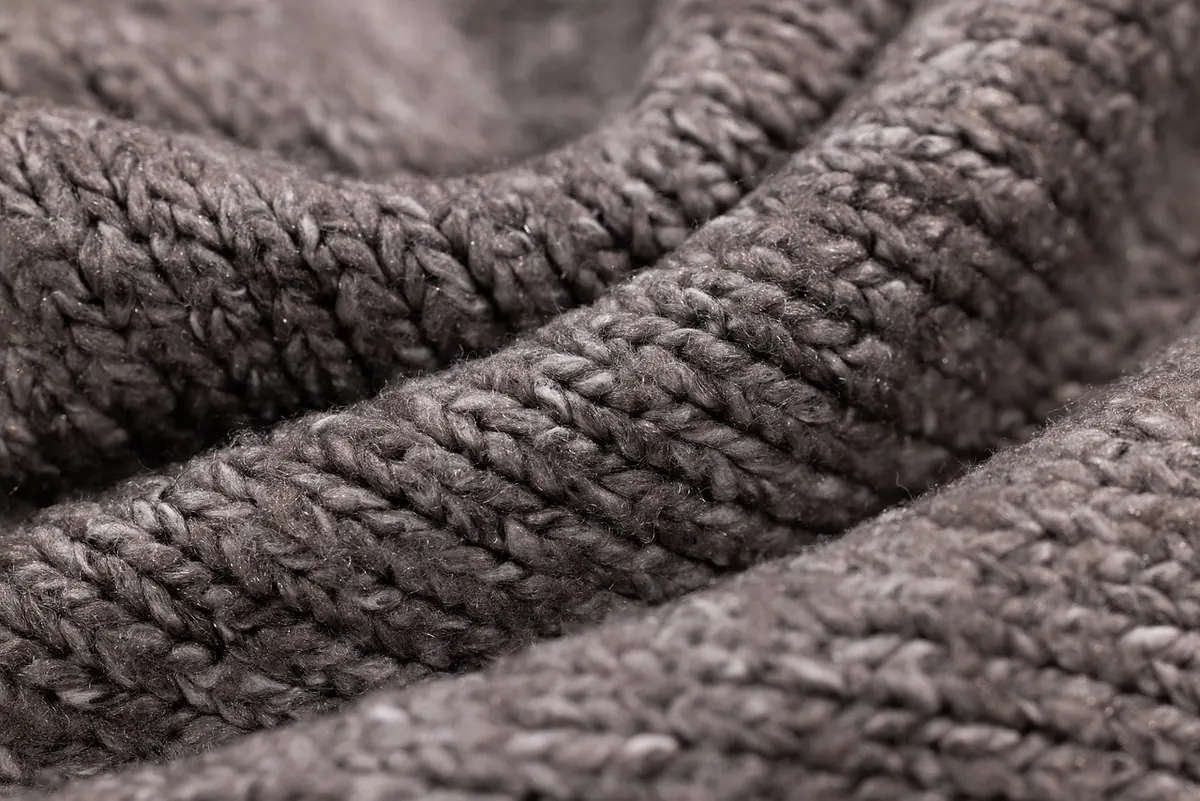
Set a ball of wool and a ball of cotton on the table and they look like cousins: both natural, both soft in the hand, both perfectly willing to become a sweater. Then you squeeze them. Wool springs back; cotton stays where you pressed it. Wool makes a fabric that holds its shape around your shoulders, while cotton makes one that moves with the body and slowly lengthens under its own weight. Those small physical differences decide warmth, drape, how often you will wash the finished piece, and whether it becomes the garment you reach for every week or the one that lives at the bottom of the drawer.
Warmth: Trapped Air Versus Cool Touch
Wool is warm for reasons that have little to do with thickness. The fibre crimps and has scales, so spun yarn traps pockets of air between the fibres and holds them there. Your body heats those pockets and the fabric keeps the warmth close. Wool also takes up moisture vapour from the skin and releases it slowly, which is why a slightly damp wool sweater still feels warm on a cool evening rather than clammy.
Cotton is a smooth cellulose fibre with almost no crimp. It conducts heat away from the body, which is exactly why a cotton shirt feels cool when you pick it up on a hot afternoon. That same quality makes a light cotton sweater a poor choice for a windy headland in October: it will not hold a warm pocket of air against you, and once cotton is properly wet it stays wet and clings, pulling heat away from the skin.
A working rule for island wear: wool for the layer nearest the weather, cotton for the layer nearest the sun.
Drape, Elasticity, and Stitch Definition
What wool does well
Wool is elastic, and that elasticity is the whole reason it suits structured knitting. Ribbing springs back at cuffs and hems. Cables sit plump and rounded instead of flattening. Colourwork holds a firm, even surface. A wool shawl can be blocked hard and will open into crisp points that stay crisp. Wool also forgives slightly uneven tension, and a wool garment washed and laid flat comes back close to the shape you knitted.
What cotton does well
Cotton has very little elasticity, and in knitting that is both the problem and the point. Ribbing sags. Cables read flatter. But cotton hangs: it makes fluid, weighty fabric with real drape, which is why it excels in summer tees, loose cardigans, market bags and lace with a soft fall. Expect growth. A cotton tunic that sits at mid-hip when dry can hang an inch or two longer after a day of wear, then come back partway in the wash. Knit cotton tops slightly shorter than you think you need and let the weight of the yarn do the rest. Cotton also shows every irregular stitch, so swatch before you commit to a large stocking-stitch panel.
Seasonal Comfort in Real Weather
Think about the three or four conditions the garment will actually meet: a cool morning walk, a warm midday market, a damp evening, a heated room. Wool handles the first and third. Fine merino next to the skin is comfortable in a way that coarse wool is not, and a wool sweater over a cotton shirt covers most of a shoulder-season day. Cotton handles the second and fourth, and it is the better choice for anyone who finds wool prickly at the neck.
Watch the wet-weight question. A soaked cotton sweater is heavy, slow to dry and cold against the body. A soaked wool sweater is also heavy, but it keeps working while damp and dries from the inside out. If the knit will travel to the beach, sit on a boat, or get splashed, factor that in before you fall in love with a cotton cable.
Care, Wear, and How Long It Lasts
Wool asks for a little attention. Wash by hand or on a wool cycle at low temperature with a pH-neutral soap, use a low spin, and dry flat on a mesh rack. Wash less than you think: airing a sweater overnight does more than a machine cycle. Pilling under the arms and where a bag strap rubs is normal on softer wool and can be shaved off. Store clean wool with cedar or lavender, because moths go for protein fibres and will ignore cotton entirely.
Cotton is the easier companion. It takes a machine wash at 30–40°C, tolerates a gentle spin and can be tumbled on low, though flat drying is kinder to shape. Two cautions: bright shades fade in strong sun, and many cotton yarns shrink a little on the first wash, so knit a swatch, wash it, and measure before you cast on a fitted garment. Let a heavy wet cotton piece dry flat rather than on a hanger, or the shoulders will stretch into points.
Matching Fibre to Project
- Winter sweater or cardigan worn over shirts: wool, in a worsted or DK weight.
- Summer tee, tank or light cardigan: cotton, knitted at a slightly tighter gauge than you would for wool.
- Hats, mittens and socks: wool, with a little nylon in the sock yarn for durability.
- Dishcloths, market bags, potholders: cotton, which is absorbent, machine washable and does not melt near heat.
- Baby blanket: cotton if it will be washed constantly; a soft superwash wool if warmth matters more.
- Lace shawl: wool for crisp, defined points; cotton for a heavier, drapier wrap.
Blends and the Swatch Habit
A wool-cotton blend is not a compromise, it is a sensible third option. Wool brings memory and warmth, cotton brings coolness and washability, and a blend of roughly half and half makes a good three-season sweater. Many knitters find cotton hard on the hands because it has no give; metal needles and shorter sessions help.
Whatever you choose, knit a swatch at least 12 cm square, measure it dry, then wash and dry it the way the finished object will be treated. Measure again. That single step tells you whether the fabric will grow, bloom or firm up, and it saves you from reknitting a whole body. Keep the washed swatch in your yarn box with a note of the needle size.
A swatch that has been through the wash is the only honest preview you get of the finished knit.
Before You Cast On
Ask three questions in this order: who will wear it, how often will it be washed, and in what season? A gift for someone with a busy washing machine points to cotton or a blend. A sweater for cold evenings points to wool. A summer top for a hot flat points to cotton every time. Then buy one extra ball, especially in cotton, where dye lots and later repairs are less forgiving, and write the fibre and care details on a card for the wearer. The right yarn is the one that suits the life the garment will actually live.
Photo: Engin_Akyurt / Pixabay